The Owner Is Your Assistant Producer
Your client knows the dog better than you do. Your job is to make sure they know exactly how to help you.
.jpg)
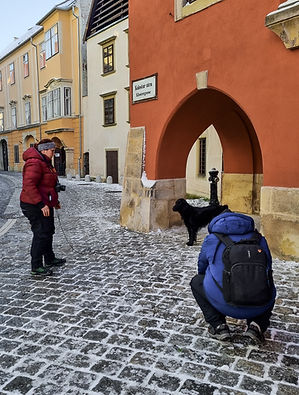
When I photograph a dog, I almost never position the dog myself. I tell the owner exactly where I want the dog, where I want the front legs, where I want the back legs, whether I want the body stretched a little more, a little to the right, a little to the left... and the owner does it.
And while they’re doing it, I don’t shut up for a second. “Yes, exactly there... a little more to the right... move that leg just a little... perfect... now the back legs a bit... that’s it!” There’s a very simple reason for that. If I stay quiet, the owner has to guess what I want. They can’t see the frame I’m seeing through the camera, they don’t know that another five centimeters to the right will put the dog’s head exactly where I want it, and they definitely don’t know that two minutes ago I already decided where I want the dog to stand and which direction I want it to look.
For me, the owner is my assistant producer during a photoshoot, which means I need to direct them too. Once the dog is exactly where I want it, I tell the owner where to go, because their position is one of the best tools I have for controlling the dog’s gaze. If I want the dog looking slightly to the right of the camera, that’s where the owner goes. If I want the dog looking in the other direction, I move the owner to the other side. A lot of the time, that’s all I need, the dog simply follows their person with their eyes, and I get a natural, steady look in exactly the direction I want.
If I want the dog looking straight at me, that’s actually when I’ll often ask the owner to take one step to the side, get out of my frame... and become a statue. Don’t move. The moment the owner moves, many dogs will immediately look at them. Once the owner is frozen, I can start working with the dog myself, making sounds, using something interesting or finding another way to get its attention toward me.
The owner has another very important job here, they know their dog much better than I do. I can stand there for five minutes going through the entire collection of ridiculous sounds dog photographers develop over the years, or I can simply ask: “Is there a word that gets a reaction?” Sometimes there is. “Cat?”, “Want to go out?”, “Where’s Dad?”... in ten seconds the owner can save me a lot of experimenting and give me exactly that little thing that brings out the expression I’m looking for.
On the other hand, you can have a completely calm, well-behaved and easy dog, with an owner standing next to it who is stressed, constantly moving, constantly talking, giving treats at the wrong moments and making noises from every direction... and suddenly the easiest dog in the world has no idea who to listen to or what the hell everyone wants from it.
One of the most common examples is when I ask the owner to do something small to get the dog’s attention and they simply call the dog’s name. No! In most cases, when you call a dog by its name, you’re not telling it “look over here”. As far as the dog is concerned, you just said “come to me”. And now the dog that was finally standing in exactly the right place starts walking toward the owner.
Or I finally get exactly what I want, the dog is in the perfect position, the body is perfect, the head is perfect, and I say: “That’s it! Stop! Perfect! Don’t move now!” Then the owner thinks: what a good dog, he deserves a treat. Hand goes into the pocket, the dog sees the hand, one little step forward... there goes my “perfect”.
Same thing with STAY. If the dog breaks the STAY before we release it, that’s not the moment to reward it for coming back to you. We want the dog to understand when the job is finished, not decide by itself that every three seconds it can leave its position and get rewarded for it.
A lot of photographers treat the owner as if their job was to bring the dog to the photoshoot and somehow they’re supposed to know what to do from there. For me, the owner is part of my team, but I can’t expect them to automatically know how to be part of that team. I need to explain exactly where to stand, when to move, when to talk, when to make a sound, when to give a treat... and sometimes, most importantly, when to do absolutely nothing.
Sometimes I also need to calm them down. An owner who really wants to help can easily do three times too much with the best intentions. More commands, more movement, more rewards, more pressure... and the dog feels all of it. A calm owner who gets clear instructions from me, and communicates clearly with their dog, makes the job easier for everyone.
If you’re not clear with the owner, eventually they’re frustrated, the dog is frustrated, you’re frustrated, the session feels much harder than it ever needed to be, and you go home thinking you’re definitely not getting paid enough for this shit.
But that one is on you.
The owner didn’t know what you wanted from them, because you never really explained it the way you should.